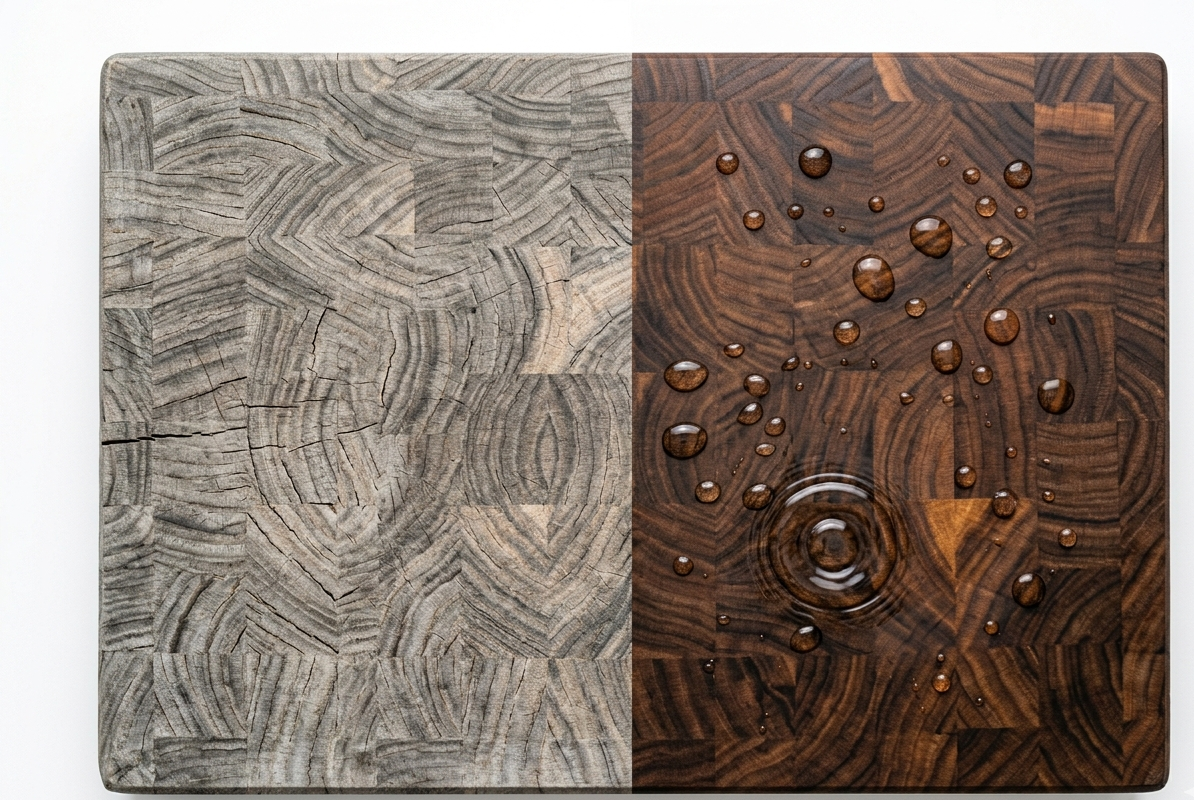
If you want to know how to oil a wooden cutting board the right way, this 5-step guide covers everything.
New: The Complete Guide to Wooden Cutting Boards – Everything about types, cleaning, oiling & maintenance.Clean your board properly first →
Why You Must Oil a Wooden Cutting Board
Wood is porous. Every time you wash your cutting board, it loses its natural oils. Without oil, the wood fibers dry out and shrink. This causes:
- Cracks and splits that trap bacteria
- Warping that makes the board wobble
- Stains from food that soak into dry wood
- Dull, gray appearance instead of rich wood grain
Oiling creates a protective barrier that keeps water out and keeps the wood stable.
What Is the Best Oil for a Cutting Board?
Not all oils are safe. You need a food-grade oil that won’t go rancid.
1. Food-Grade Mineral Oil – Best Overall
This is the gold standard. It’s cheap, odorless, tasteless, and never goes rancid. You can find it at any pharmacy labeled “Mineral Oil USP”. Avoid baby oil. It has fragrance added.
2. Beeswax + Mineral Oil Mix – Best Protection
This is called “board butter”. The beeswax seals the surface after the mineral oil soaks in. It gives extra water resistance and a nice satin finish. You can buy it pre-mixed or make your own.
Oils to NEVER Use on a Cutting Board
Avoid these at all costs:
- Olive oil, vegetable oil, coconut oil: These are cooking oils. They go rancid in 2-3 weeks and will make your board smell terrible.
- Linseed oil: Only if it’s 100% food-grade. Hardware store linseed has toxic dryers.
- Tung oil: Most versions have chemical additives. Not food-safe unless labeled pure.
How Often Should You Oil a Cutting Board?
Follow this simple rule:
- New board: Once per day for the first week
- First month: Once per week
- After that: Once per month, or when it looks dry
The Water Test: Sprinkle a few drops of water on your board. If the water beads up, you’re good. If it soaks in and darkens the wood, it’s time to oil.
How to Oil a Cutting Board in 5 Easy Steps
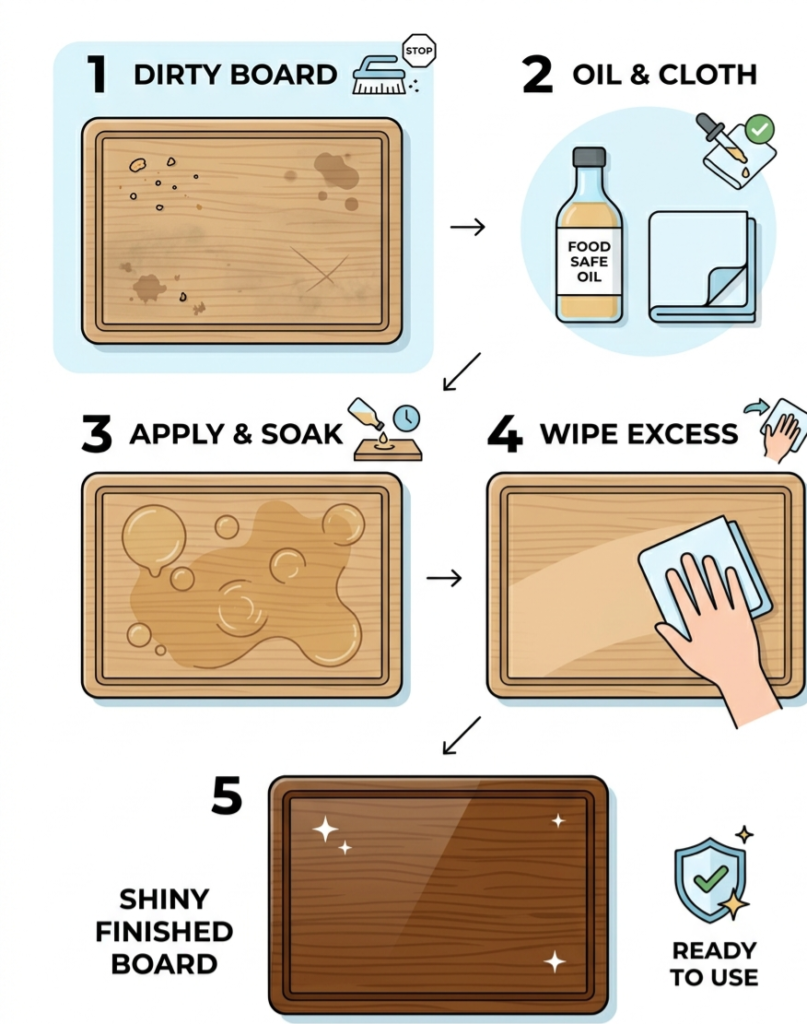
Step 1: Clean and Dry Completely
Wash the board with mild soap and warm water. Scrub both sides. Rinse well. Now the important part: let it dry 100% for at least 4 hours. Oiling a damp board traps moisture and causes mold. Stand it upright to dry.
Step 2: Apply Oil Generously
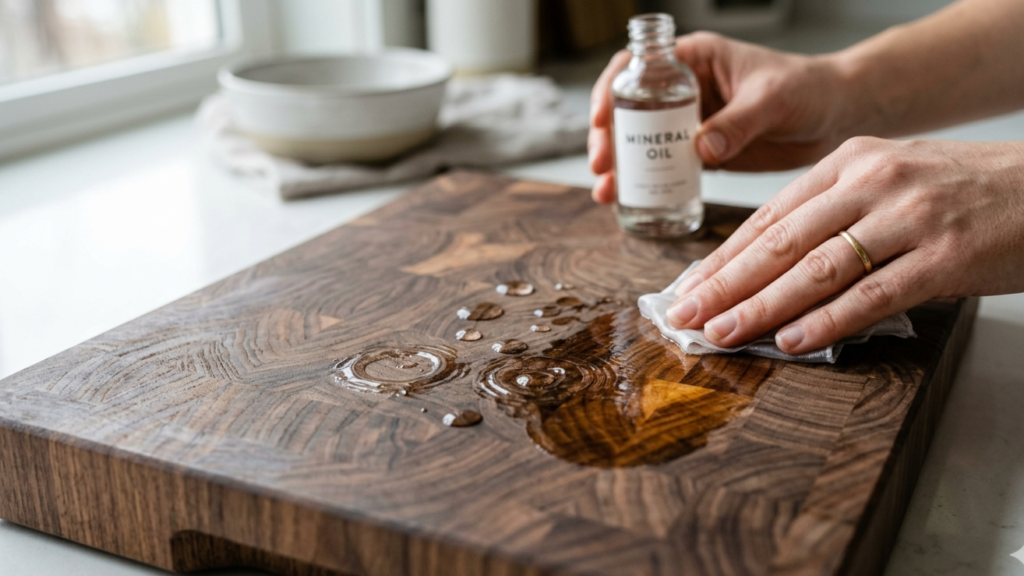
Pour a good amount of food-grade mineral oil directly on the board. Don’t be shy. Use about 2-3 tablespoons for an average board. Use a clean cloth or paper towel to spread it over the entire surface, including sides and edges. Yes, oil both sides to prevent warping.
Step 3: Let It Soak Overnight
Leave the board flat and let the oil soak in for 6-12 hours. Overnight is perfect. You’ll see dry spots appear as the wood drinks the oil. Add more oil to those dry spots. The wood will stop absorbing when it’s full.
Step 4: Wipe Off Excess Oil
After soaking, use a clean, dry cloth or paper towel to wipe off all excess oil. Rub hard. The surface should feel smooth and slightly satin, not greasy or sticky. If it feels sticky, you didn’t wipe enough.
Step 5: Buff for Extra Shine [Optional]
For a pro finish, apply a thin layer of board butter. Let it sit 15 minutes, then buff with a clean cloth until it shines. This step adds extra water resistance.
3 Common Mistakes to Avoid
- Oiling a wet board: This traps water and causes black mold spots.
- Using cooking oil: It will go rancid and your board will stink like old nuts.
- Wiping too soon: If you wipe after 10 minutes, the wood didn’t absorb enough. Be patient.
FAQs About Oiling Cutting Boards
Can I use olive oil on my cutting board?
No. Never use olive oil, vegetable oil, or any cooking oil. They oxidize and go rancid. This creates a sticky, smelly mess and promotes bacteria growth. Only use food-grade mineral oil.
How long does it take for a cutting board to absorb oil?
Most boards absorb oil in 4-12 hours. End grain boards drink more and take longer. Leave it overnight to be safe. The wood will tell you when it’s done by not absorbing more.
Do I need to oil both sides of a cutting board?
Yes, always. If you only oil one side, the board absorbs moisture unevenly. This causes warping and cupping. Oil all 6 sides: top, bottom, and all 4 edges.
My board feels sticky after oiling. What did I do wrong?
You either used the wrong oil, or you didn’t wipe off the excess. If you used mineral oil, just wipe harder with a clean cloth. If you used cooking oil, wash it with soap and start over with mineral oil.
For full countertop maintenance beyond oiling, read our complete butcher block countertop care guide with the 7 rules to prevent cracks and stains.Final Thoughts
Oiling a wooden cutting board takes 10 minutes of work and saves you from a $100 replacement. A well-oiled board will last 20+ years, resist stains, and look beautiful on your counter.
Your board is probably thirsty right now. Go check it with the water test. If water doesn’t bead up, it’s time to oil.
Want to Go Deeper on Wooden Cutting Boards?
Picking between end grain and edge grain is just the start. Wood type, thickness, and finish all change how your board performs and how long it lasts. For the full breakdown of everything from maple vs walnut to oil types and daily care, check our complete guide to wooden cutting boards.
If you want a second opinion from a woodworking pro, Fine Woodworking has a detailed technical guide on why end grain construction is favored for butcher blocks. Their tests show the same 3x knife-friendliness we mentioned above.
Thanks for sharing your thoughts on . Regards
Most welcome