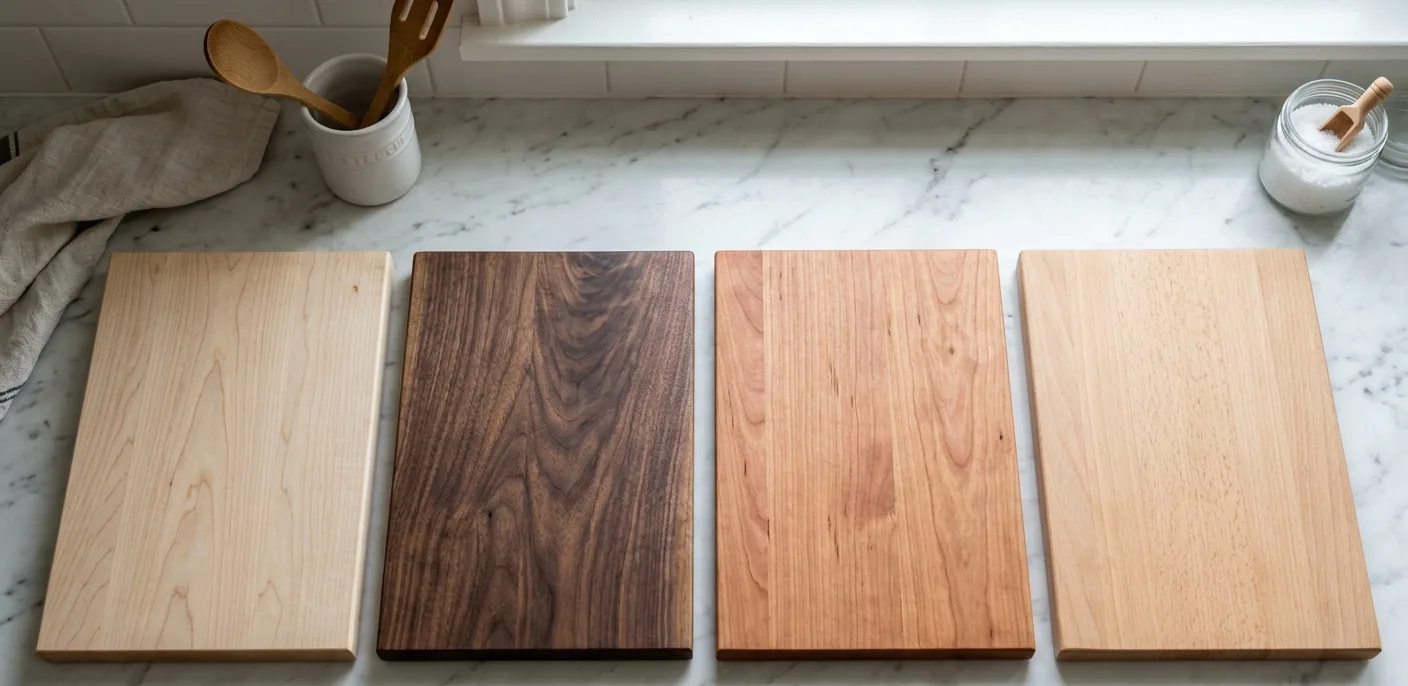
Picking the right wooden cutting boards saves you money long term
You can see a great example of this in the [Bevel & Bond End-Grain Maple Cutting Board]
A wooden cutting board is not just a kitchen tool—it is a 20-year investment in your health, your knives, and your cooking experience. But 90% of people choose the wrong wood, use the wrong oil, or clean it incorrectly, turning a $150 board into trash within 18 months. This is the complete wooden cutting board guide that connects every topic from your site into one master resource. Whether you are buying your first board, rescuing a smelly one, or building a kitchen ecosystem, this guide gives you the full roadmap with science-backed answers.
Table of Contents
This guide covers everything about buying, oiling, and restoring wooden cutting boards for life
- Part 1: How to Choose the Right Wood
- Part 2: End Grain vs Edge Grain Wooden Cutting Boards — Which Wins?
- Part 3: Bamboo vs Wood Cutting Boards — The Sanitation Truth
- Part 4: Oiling & Seasoning — The Only Safe Methods
- Part 5: Cleaning & Odor Removal
- Part 6: Restoration — When to Sand vs Replace
- Part 7: Butcher Block Countertop Care
- Part 8: Building Your Cutting Board Ecosystem
- FAQ: Every Question Answered
Part 1: How to Choose the Right Wood
Choosing the best wood for cutting boards is a scientific process, not a matter of taste. The FDA has zero cutting board regulations, and the USDA simply says “use hardwood.” That advice is useless without understanding the four rules of food-safe wood.
These rules apply to all types of wooden cutting boards, from small prep boards to large butcher blocks.
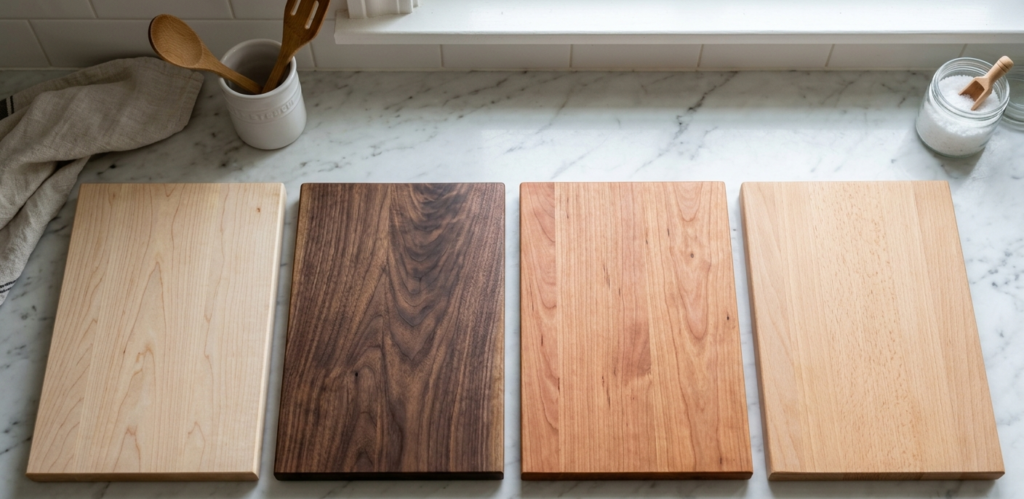
Rule 1: Porosity — Closed Grain Kills Bacteria
Wood pores are either closed or open. Closed-grain woods like hard maple have pores so small (50-80 microns) that bacteria cannot penetrate. A USDA study found that maple killed 99.98% of E. coli within 12 hours, while red oak—an open-grain wood—retained 600 times more bacteria. Never use oak for cutting boards. For the full science, see our best wood for cutting boards guide.
Rule 2: Janka Hardness — The 900-1600 Sweet Spot
The Janka scale measures wood hardness. Under 900 lbf (like pine at 380) and the board gouges deeply, creating permanent bacteria farms. Over 1600 lbf (like bamboo at 1650) and the board acts like sandpaper, destroying knife edges. The goldilocks zone includes:
- Black Walnut: 1,010 lbf — gentle on knives, beautiful color
- Teak: 1,155 lbf — waterproof but high silica dulls knives
- European Beech: 1,300 lbf — the European commercial standard
- Hard Maple: 1,450 lbf — the NSF-certified commercial kitchen standard
Rule 3: Toxicity — “Natural” Does Not Mean Safe
Trees evolved chemical weapons to stop bugs. Those chemicals do not disappear when you make a board. Never use rosewoods (causes dermatitis and asthma), yew (taxine alkaloids can kill), or lignum vitae (causes skin blisters). Stick to the safe list: maple, walnut, cherry, beech, and teak (FSC-certified only).
Rule 4: Tannins and Taste Transfer
High-tannin woods like oak and walnut can leach bitter compounds into wet food. High-oil woods like cedar contain natural pesticides. The most neutral woods—hard maple and beech—are why 95% of commercial boards are maple. For a deep dive into all 7 safe woods and 3 toxic ones, read our complete wood selection guide.
Part 2: End Grain vs Edge Grain — Which Construction Wins?
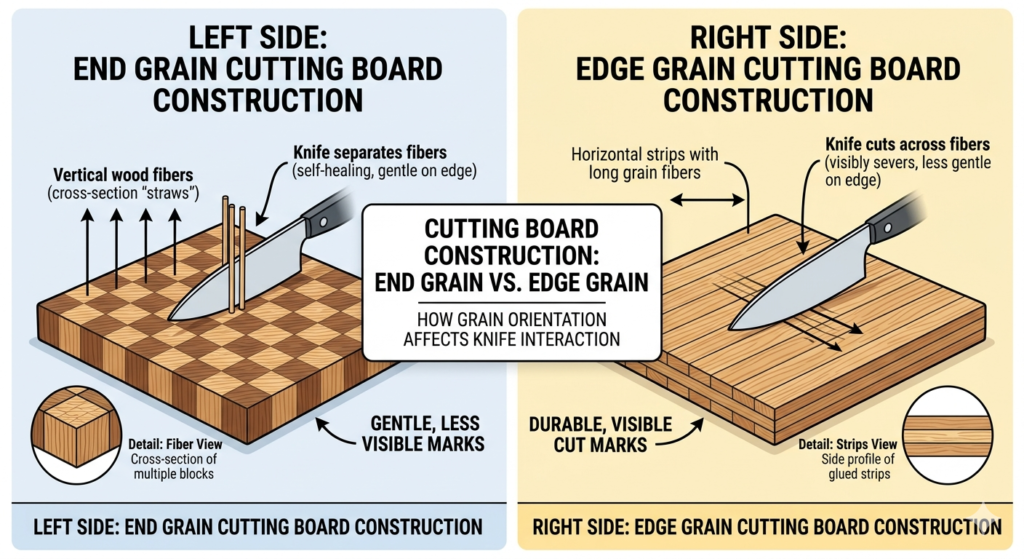
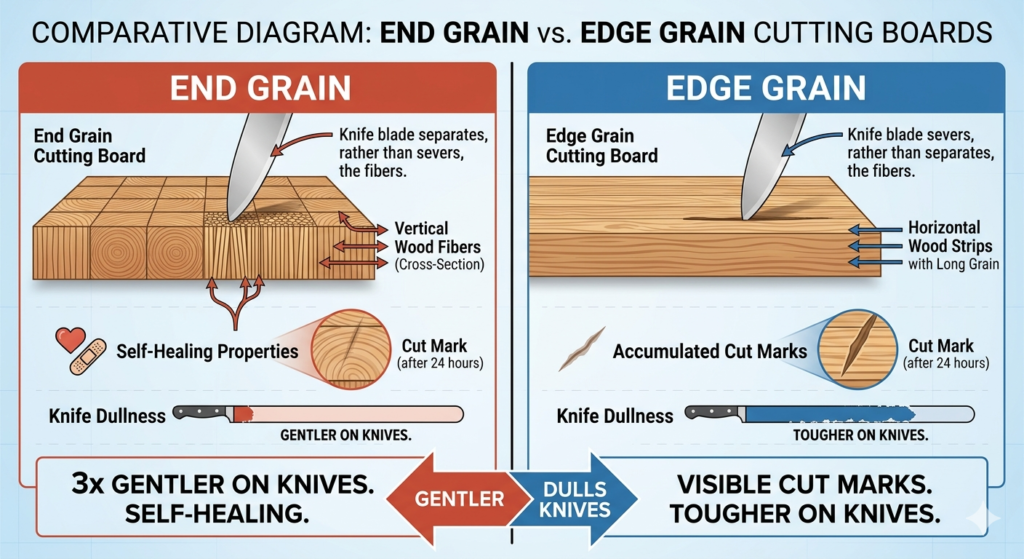
Grain direction is the difference between a $50 board and a $200 board. It determines knife life, board longevity, and how easily bacteria hide.
| Feature | End Grain | Edge Grain |
|---|---|---|
| Knife Impact | Blade slides between fibers. Self-healing surface. | Blade cuts across fibers. Permanent marks. |
| Knife Edge Life | 3x longer between sharpenings | Standard wear |
| Lifespan | 15-20 years | 5-8 years |
| Price (12×18) | $140-$280 | $55-$85 |
| Maintenance | Oil every 2-3 weeks | Oil monthly |
| Weight | Heavy, stable | Lighter, easier to handle |
Buy end grain if: You spent $200+ on chef knives, cook daily, and want a board that lasts 15+ years. Buy edge grain if: You want the best value, cook 3-4 times per week, or need a lighter board. For the full comparison with photos, see our end grain vs edge grain guide.
Part 3: Bamboo vs Wood — The Sanitation Truth Wooden
Bamboo is marketed as “eco-friendly” and “naturally antibacterial.” Both claims are misleading. The FTC fined three bamboo board companies in 2021 for false antibacterial claims. Here is the reality.
You can see a great example of this in the [Bevel & Bond End-Grain Maple Cutting Board]
Bamboo is a grass, not wood. It is held together by adhesives that melt in dishwasher heat and separate when wet. The resulting cracks trap food particles and bacteria permanently. A UC Davis study found oak boards had 600x more E. coli than maple after washing—bamboo performs similarly to oak because of its porous, glued structure.
Hardwood, by contrast, has natural antimicrobial properties. Bacteria trapped in maple’s tight grain are killed within 3-5 minutes as the wood draws moisture away from them. This is why health departments in 48 states approve hardwood butcher blocks and why no Michelin-star kitchen uses bamboo for food prep. For the full lab data, read our bamboo vs wood sanitation test.
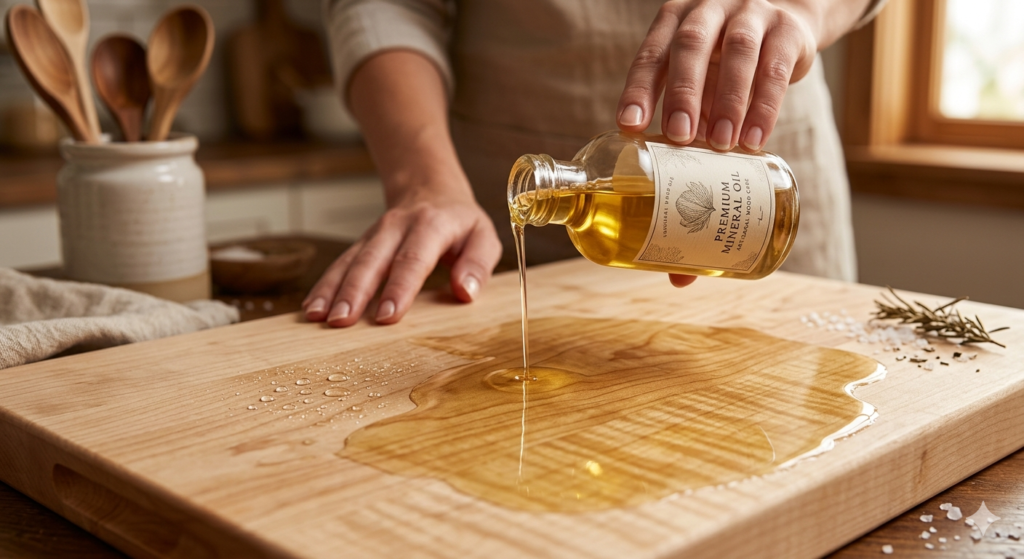
Part 4: Oiling & Seasoning Wooden Cutting Boards – The Only Safe Methods
Oiling is not optional. Unoiled wood is a sponge for water, bacteria, and odors. But using the wrong oil is worse than using no oil at all.
The 3 Oils That Destroy Boards
| Oil | Why It Fails | Time to Rancid |
|---|---|---|
| Coconut Oil | Unsaturated fats oxidize. Becomes sticky bacteria magnet. | 14 days |
| Olive Oil | 75% unsaturated fat. Turns sticky in 7 days. Attracts ants. | 7 days |
| Vegetable/Canola Oil | Becomes hard varnish. Not food-safe after oxidation. | 5 days |
Our 30-day coconut oil lab test proved that coconut oil reaches a toxic peroxide value of 28.9 meq/kg by day 30. The USDA considers anything above 10 meq/kg unfit for food contact. For the full test data with photos, see the mineral oil vs coconut oil comparison.
The Only 2 Safe Options
1. Food-Grade Mineral Oil USP ($10)
Never goes rancid. FDA/USDA approved. Buy Snow River or Thirteen Chefs. Avoid laxative aisle mineral oil with additives. Apply monthly: flood the board, let soak 20 minutes, wipe off, repeat 3x on day one. For the complete protocol, see how to oil a wooden cutting board.
2. Beeswax + Mineral Oil Blend ($20)
Recipe: 1 part beeswax, 4 parts mineral oil. Melt in double boiler. Adds water resistance, fills knife marks, lasts 2-3 months. Best for heavy-use boards and end grain butcher blocks. For the wax vs oil breakdown, read beeswax vs mineral oil.
Seasoning vs Oiling — What’s the Difference?
Oiling is monthly maintenance. Seasoning is the initial build-up of protective layers on a new or freshly sanded board. New boards need daily oiling for 7 days, then every 3 days for 3 weeks. This creates a deep moisture barrier that prevents cracks and warping. For the exact schedule, see our seasoning guide.
Part 5: Cleaning & Odor Removal
90% of people clean wooden cutting boards wrong. Dishwashers, bleach, and soaking destroy wood fibers and create cracks that harbor bacteria.
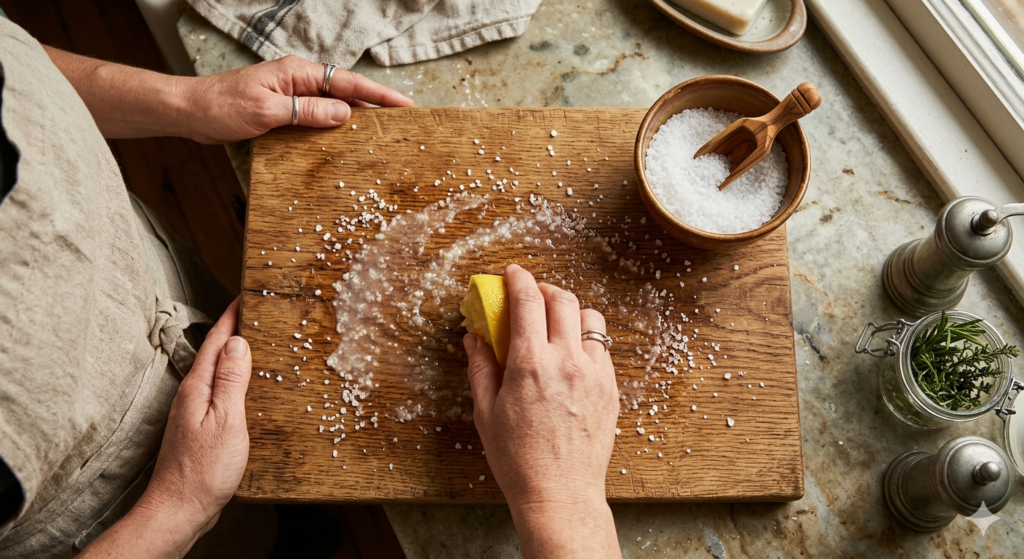
The Correct Daily Clean
- Wash immediately after use with hot soapy water and a nylon brush.
- Dry with a towel immediately—never let it air-dry flat.
- Store upright on its edge for air circulation.
Deep Cleaning Methods
- Lemon + Salt (Fastest): Cover surface with coarse salt, scrub with lemon half for 2-3 minutes, let dwell 10 minutes, scrape off. Removes 90% of onion and garlic odors.
- Baking Soda Paste (Deep odors): Mix 3 tbsp baking soda + 1 tbsp water into a paste. Spread ¼-inch thick, wait 30-60 minutes, scrub and rinse. Neutralizes acidic sulfur compounds.
- Vinegar Spray (Bacteria): Spray undiluted white vinegar, wait 10 minutes, wipe. Kills 99.9% of pathogens per FDA guidelines.
For the full protocol including weekly and monthly schedules, see our deep cleaning guide. If your board smells like onion even after cleaning, our onion odor removal guide has 5 methods ranked from fastest to most powerful.
Part 6: Restoration – When to Sand vs Replace Wooden Cutting Boards
A worn-out board does not belong in the trash. With the right techniques, you can restore a wooden cutting board to its original beauty and make it food-safe again.
Restoration Decision Tree
- Surface stains + shallow grooves: Sand with 80-grit, then 120, then 220. Re-oil with 3 coats of mineral oil. Board is saved.
- Deep cracks under 1/8 inch: Widen slightly, inject food-safe Titebond III glue, clamp 24 hours, sand flush, re-oil.
- Black mold spots: Sand aggressively past the mold line. If mold penetrates deeper than 2mm, replace the board. Mold toxins cannot be fully removed from wood fibers.
- Rancid oil (coconut/olive/vegetable): Sand to 220-grit to remove contaminated layer, wipe with mineral spirits, dry 48 hours, start mineral oil seasoning from zero.
For the complete sanding sequence, crack repair, and oiling protocol, see our restoration guide. The process is identical for cutting boards and butcher block countertops—just use an orbital sander for larger surfaces.
Part 7: Butcher Block Countertop Care
A $3,000 butcher block countertop can last 50+ years or become a cracked, moldy mess in 6 months. The difference is 15 minutes of care per month.
The 7 Rules of Countertop Survival
- 30-Day Oiling Rule: Oil daily for 7 days, then every 3 days for 3 weeks. New wood is thirsty—kiln-dried boards have only 6-8% moisture.
- Never Let Water Sit: Standing water causes 70% of all cracks. Wipe spills immediately.
- Monthly Maintenance: Heavy coat of mineral oil every month. If water stops beading, oil immediately.
- Heat Destroys Wood: Hot pans leave black burn marks in 3 seconds. Always use trivets.
- Choose the Right Finish: Mineral oil for food prep areas. Waterlox for water resistance. Never use polyurethane near food.
- Control Humidity: Keep kitchen at 35-45% humidity year-round. Run humidifiers in winter, dehumidifiers in summer.
- Sand Scratches: Deep cuts are fixable with 80-grit to 220-grit sandpaper and 2 hours of work. Replacement is rarely needed.
For the full protocol with cost comparisons against quartz and granite, see our butcher block countertop care guide.
Part 8: Building Your Cutting Board Ecosystem
One board is never enough. Professional kitchens use color-coded boards for a reason. Here is the optimal setup for 99% of home cooks:
| Board | Wood & Grain | Purpose | Care Frequency |
|---|---|---|---|
| Daily Prep | Edge-grain Hard Maple | Vegetables, bread, cooked meat | Clean daily, oil monthly |
| Raw Meat | Dedicated Maple or Plastic | Chicken, beef, fish only | Clean + vinegar after every use |
| Serving | End-grain Black Walnut | Cheese, charcuterie, bread | Clean after use, oil monthly |
FAQ: Every Question Answered
What is the best wood for wooden cutting boards?
The best wood for wooden cutting boards is closed-grain hardwood like maple, walnut, or cherry. These woods are dense enough to resist knife scarring but soft enough to protect your blade edge. Avoid open-grain woods like oak and ash for raw meat because bacteria can hide in the large pores. For most home cooks, American hard maple is the #1 choice for wooden cutting boards because it’s affordable, durable, and NSF-certified for commercial kitchens.
How often should I oil my cutting board?
New boards: daily for 7 days, then every 3 days for 3 weeks. Established boards: monthly. If water stops beading on the surface, oil immediately regardless of schedule. See oiling guide for the full protocol.
Can I put my wooden cutting board in the dishwasher?
Never. Dishwasher heat and water pressure warp and crack wood in 1-2 cycles. The glue joints on end-grain boards separate. Hand wash only with hot soapy water, then dry immediately.
Is maple or walnut better for cutting boards?
Maple wins for durability and sanitation (1,450 lbf Janka, tight grain kills bacteria). Walnut wins for knife care and aesthetics (1,010 lbf, gentler on edges, stunning color). Many cooks own both. See the full breakdown in our walnut vs maple guide.
Why does my cutting board smell like onion?
Onion sulfur compounds penetrate 2-3mm into wood pores. Soap only cleans the surface 0.1mm deep. Use the lemon + salt method to draw odors out through osmosis, or baking soda paste to neutralize sulfur chemically. For 5 ranked methods, see onion odor removal guide.
Can I use coconut oil on my cutting board?
No. Coconut oil goes rancid in 14 days, reaches toxic peroxide levels by day 30, and becomes a bacteria magnet. Only food-grade mineral oil or beeswax blends are safe. See our lab-tested proof.
How do I know if my board needs restoration or replacement?
If the board has surface stains, shallow grooves, or cracks under 1/8 inch: restore it. If mold penetrates deeper than 2mm, glue joints are completely separated, or the board is warped into a U-shape: replace it. See restoration guide for the decision tree.
What is the best oil for cutting boards in 2026?
Food-grade mineral oil USP is the only FDA/USDA-approved option that never goes rancid. For enhanced protection, use a beeswax + mineral oil blend. For the full comparison of all options, see best oil for cutting boards 2026.
You can see a great example of this in the [Bevel & Bond End-Grain Maple Cutting Board]
Complete WoodStuffHQ Resource Library
- 🌳 Best Wood for Cutting Boards: 7 Safe Options
- 🔪 End Grain vs Edge Grain Cutting Board
- 🌰 Walnut vs Maple Cutting Board
- 🌰 Walnut vs Maple Cutting Board: 7 Tests
- 🎋 Bamboo vs Wood Cutting Board: Which Is More Sanitary?
- 🛢️ How to Oil a Wooden Cutting Board
- ✨ How to Season a Wooden Cutting Board
- 🧽 How to Clean a Wooden Cutting Board
- 🧅 Wooden Cutting Board Smells Like Onion: 5 Fixes
- 🔧 How to Restore a Wooden Cutting Board
- 🏠 Butcher Block Countertop Care: 7 Rules
- 🥥 Is Coconut Oil Good for Cutting Boards? [Lab Tested]
- ⚖️ Mineral Oil vs Coconut Oil Cutting Board
- 🐝 Beeswax vs Mineral Oil for Cutting Boards
- 🏆 Best Oil for Cutting Boards 2026
- 🏆 Best Oil for Wood Cutting Boards
External Sources & References
- 📋 FDA Safe Food Handling Guidelines — Official standards for wooden food-contact surfaces.
- 🔬 NIH Study: Antibacterial Effects of Wood vs. Plastic — Peer-reviewed research confirming wood’s natural bacteria-killing properties.
- 🌡️ USDA Food Safety and Inspection Service — Best practices for preventing cross-contamination.
- 🌲 USDA Forest Service — Sustainable forestry and wood sourcing standards.
14 thoughts on “The Complete Guide to Wooden Cutting Boards: Choosing, Caring & Maintaining for Life”